Youth house and community HUB to be built on Üllői út
The fact that a building is given a new function is not in itself a social innovation. It becomes one if real local needs, stakeholder considerations and a long-term community logic are behind the physical transformation.
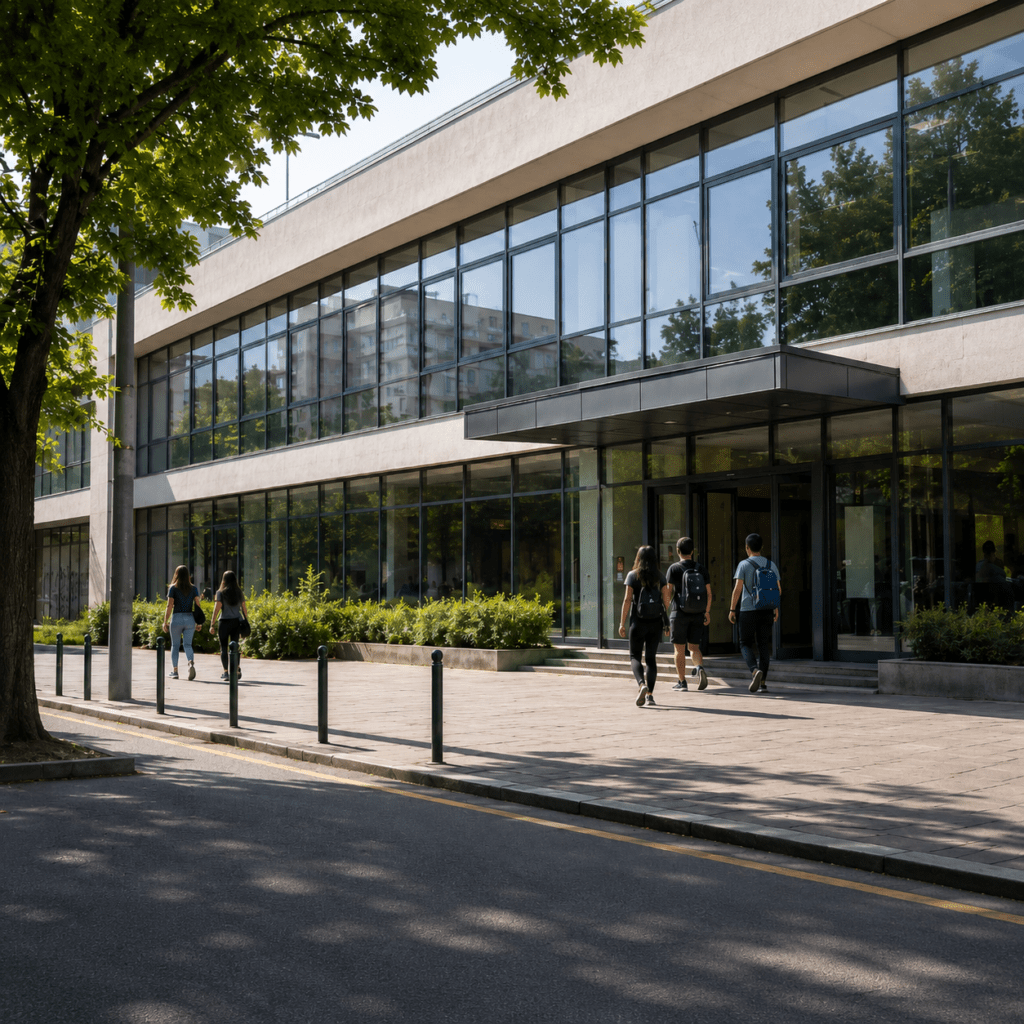
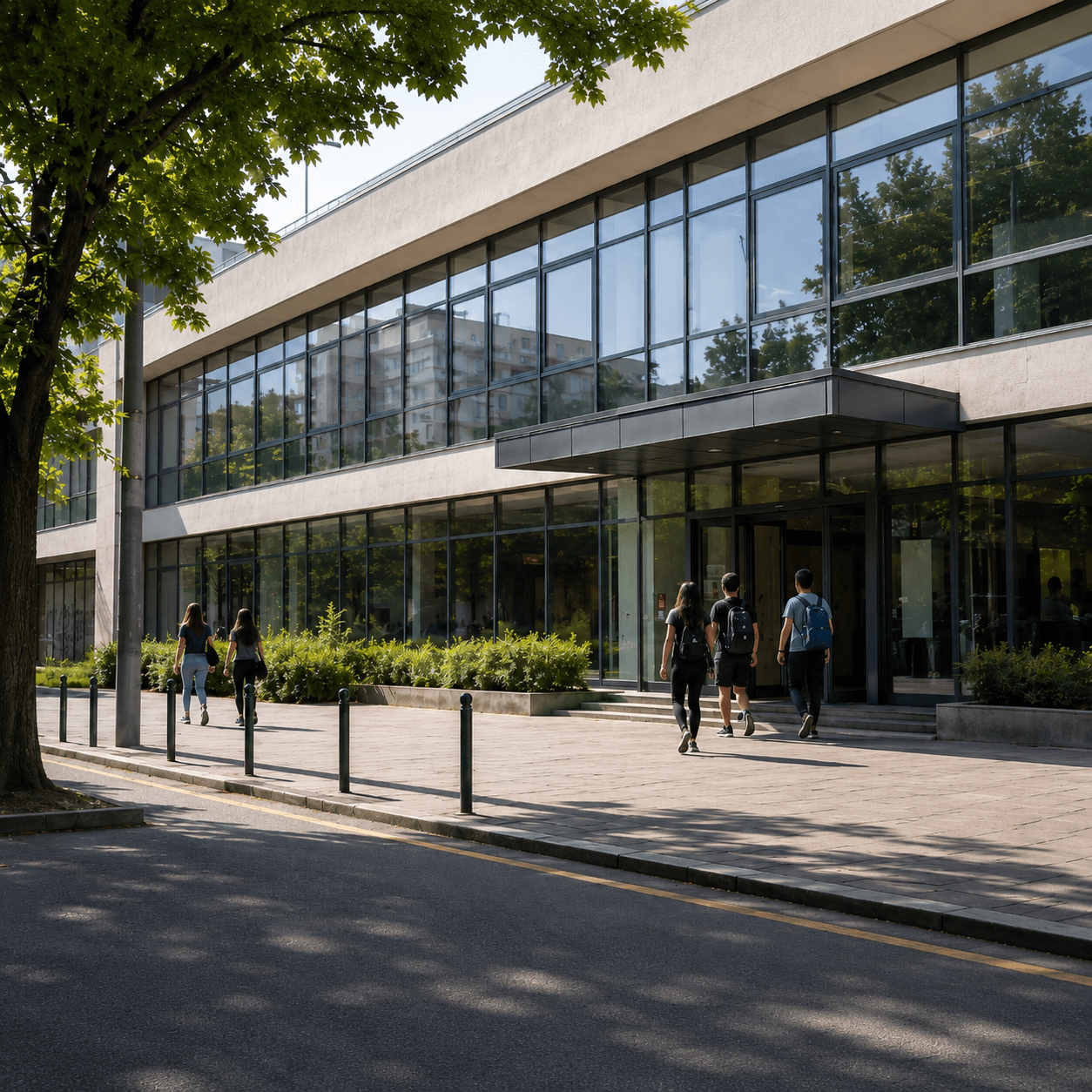
The former Pálma Fitness building on Üllői út is being transformed into a youth center and community HUB as part of the Budapest 18th district pilot development. The development, which is being implemented within the framework of the BLUEPRINT Horizon Europe project, aims to create an inclusive, easily accessible and multifunctional community space that supports the participation, learning, skill development, connection and activity of local young people.
InnoK Knowledge Management Institute supported the development of the Budapest 18th district pilot site with stakeholder and user group analysis during the preparatory and analysis phase of the project. The aim was to interpret the planned transformation not as a mere building renovation, but as a social innovation and community development process.
Development based on local needs
The issue of community spaces is not simply an infrastructural issue today. In a city district, where one can meet, learn, organize programs, ask for help or think together directly influences the quality of local connectivity.
Based on the social research experiences conducted by InnoK in Budapest’s 18th district, opportunities for community spaces, local cooperation and the development of the living environment are of paramount importance to local communities. The different districts of the district have different characteristics and needs, yet the need for connection, cooperation and the need to improve the environment emerges as a common point.
Therefore, it is particularly important that the Üllői út Youth House and Community HUB takes into account the perspectives of local actors, especially young people, already in the planning phase. Such a space can only be truly functional in the long term if it does not appear as an externally imposed function, but as a community infrastructure that responds to local needs and is based on involvement.
Who can the new HUB appeal to?
The analysis identified several stakeholder and user groups. The key players for development are local youth, local residents, local government actors, educational institutions, civil and youth organizations, social institutions, cultural and community actors, and local businesses.
One important task of the planned HUB may be to not treat these actors in isolation from each other, but to create points of connection between them. A well-functioning community space is not only a program location, but also a meeting point: between institutions, professionals, young people, families, and civil actors.
Those more vulnerable or less involved social groups whose participation is not self-evident also require special attention. Inclusive operation does not just mean open doors, but also conscious outreach, barrier-free access, clear communication, and trust-building.
A youth-friendly, non-stigmatizing space is needed
A community space can only become truly usable for young people if it is not presented as an informal, distant or stigmatizing environment. A place is needed that is safe, open, suitable for learning, hosting community programs and informal meetings.
The HUB can respond to a variety of user needs. These can include providing spaces suitable for learning and skill development, organizing youth programs and mentoring opportunities, strengthening access to digital tools and information, and supporting community events and collaborations.
One of the most important opportunities for development is for young people to be not only users, but also shapers of the new space. This is a matter of perspective. An institution created for young people will produce different results, and a space in which young people can be meaningfully involved in the design, testing and operation.
There is no real community development without participation and trust-building.
One of the important findings of InnoK’s analysis is that consciously organized participatory processes are necessary for the success of development. Local decision-making, expert knowledge and community experience can be effectively combined if stakeholders can express their opinions in structured, facilitated situations.
However, participation is not automatic. Obstacles can be lack of information, lack of trust, lack of time and resources, inequality of digital access, accessibility deficiencies or even low motivation of young people to participate.
Therefore, the project should offer both in-person and online forms of involvement. It is important to have clear, youth-friendly communication, reach out through schools and civil society organizations, and to ensure that participants receive feedback on how their suggestions have been incorporated into the process.
According to InnoK’s proposals, development can be supported by regular stakeholder meetings, youth focus groups, participatory workshops, digital feedback channels, community testing opportunities and Living Lab-based collaborations.
More than building renovation
The reuse of the former Pálma Fitness on Üllői út represents a sustainable development direction in itself. The location is well-identifiable, easily accessible, and may be suitable for a new community function.
However, the real opportunity is not only in the building. The project is about creating a youth and community space that simultaneously supports local participatory culture, community cohesion, cooperation between institutions, and social innovation.
Long-term success depends on developing a sustainable operating model, reaching different target groups, and ensuring inclusive, barrier-free operation. Lack of community embeddedness, low willingness to participate, or funding uncertainties are risks that must be addressed during the planning process.
In the BLUEPRINT project, InnoK aims to contribute, through its research, participatory and social innovation methods, to the creation of a community space that is truly built on local needs and creates long-term value for the youth and communities of the district.
Share it with others

If you would like to learn more about us and our activities, subscribe to the municipality's newsletter!
Contact
- 1184 Budapest, Ülloi út 286. Fsz. 10.
- info[at]urbanlab.hu
- © 2026 Copyright InnoK Tudásmenedzsment Intézet Nonprofit Kft. - All Rights Reserved.